01
April 17, 2025
Sidewalk Astronomy at Longfellow Middle School
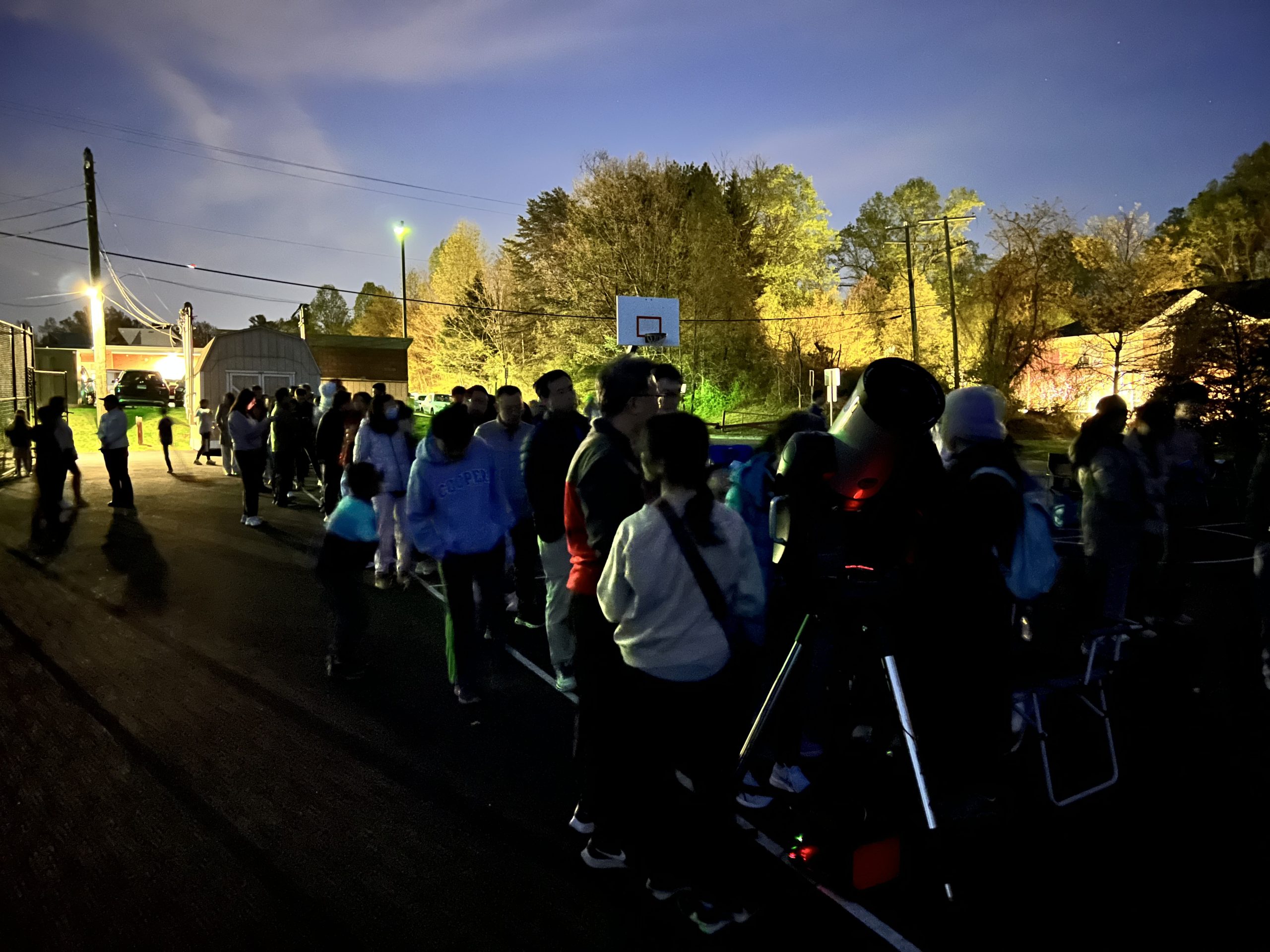
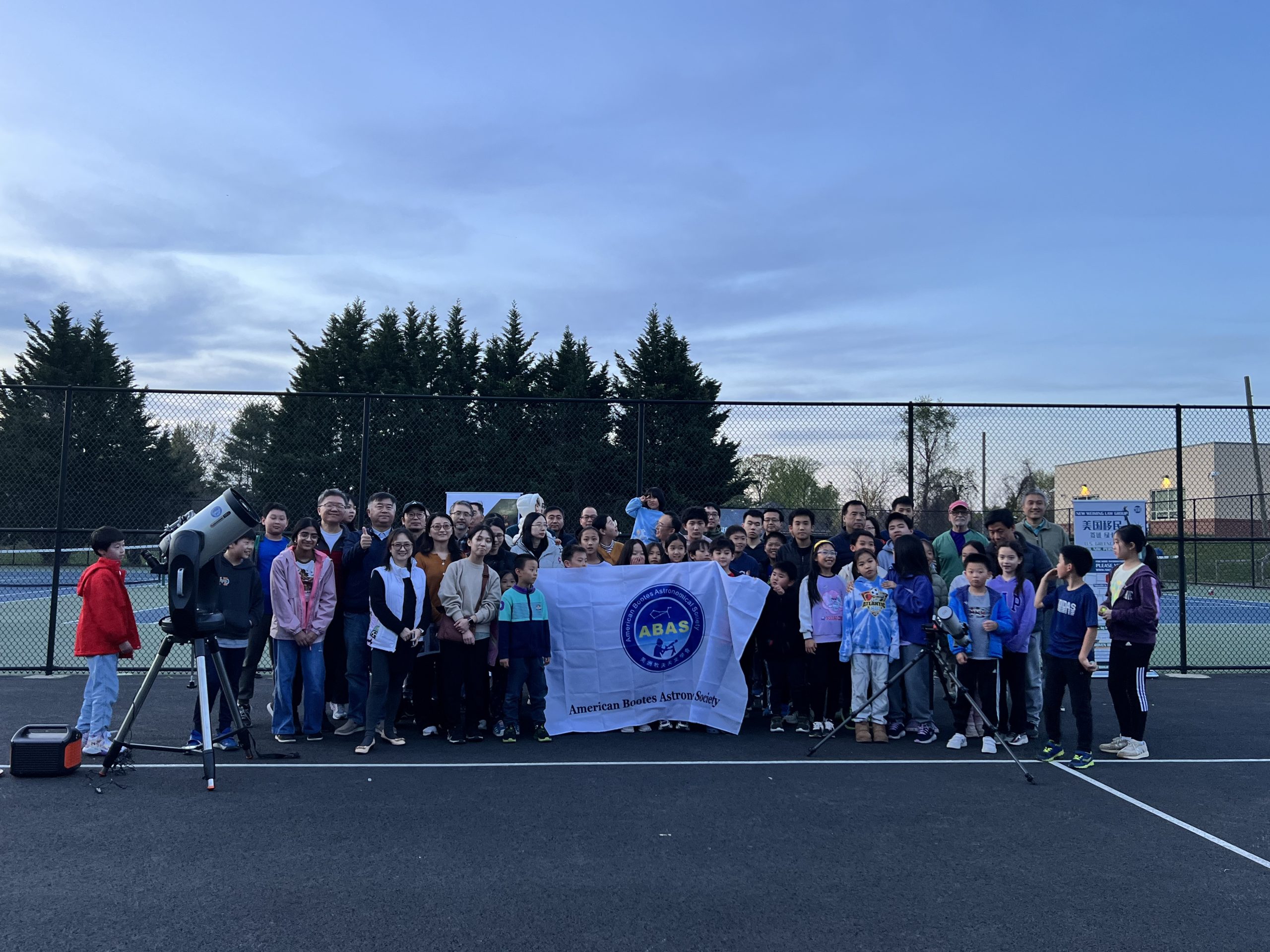
On the evening of April 17, 2025, the American Boötes Astronomical Society held a sidewalk astronomy event near the basketball courts at Longfellow Middle School in Fairfax County. About 200 students, parents, and local residents attended. A telescope with a 235 mm aperture was set up for visitors to observe Jupiter and its moons.
The main observing targets that evening were Jupiter and its four Galilean moons. Many adults and children saw details on Jupiter through a telescope for the first time, along with the four tiny points of light beside it: the Galilean moons. These moons are also major targets for planetary exploration. Europa, for example, may have an ocean beneath its icy surface. NASA's Europa Clipper mission will make repeated close flybys to investigate whether conditions there could support life. The event also introduced Mars, the Big Dipper, and winter and spring constellations such as Orion, Auriga, Leo, and Cancer.
Student volunteer Anne Zhang was a ninth grader at McLean High School at the time and a former member of Longfellow Middle School's Science Olympiad team. She helped prepare for the event and worked on site, assisting with setup and materials, explaining the night sky, fundraising, and cleaning up afterward.
02
August 11–15, 2025
Greater Washington Astronomy and STEM Summer Camp
Five days of astronomy
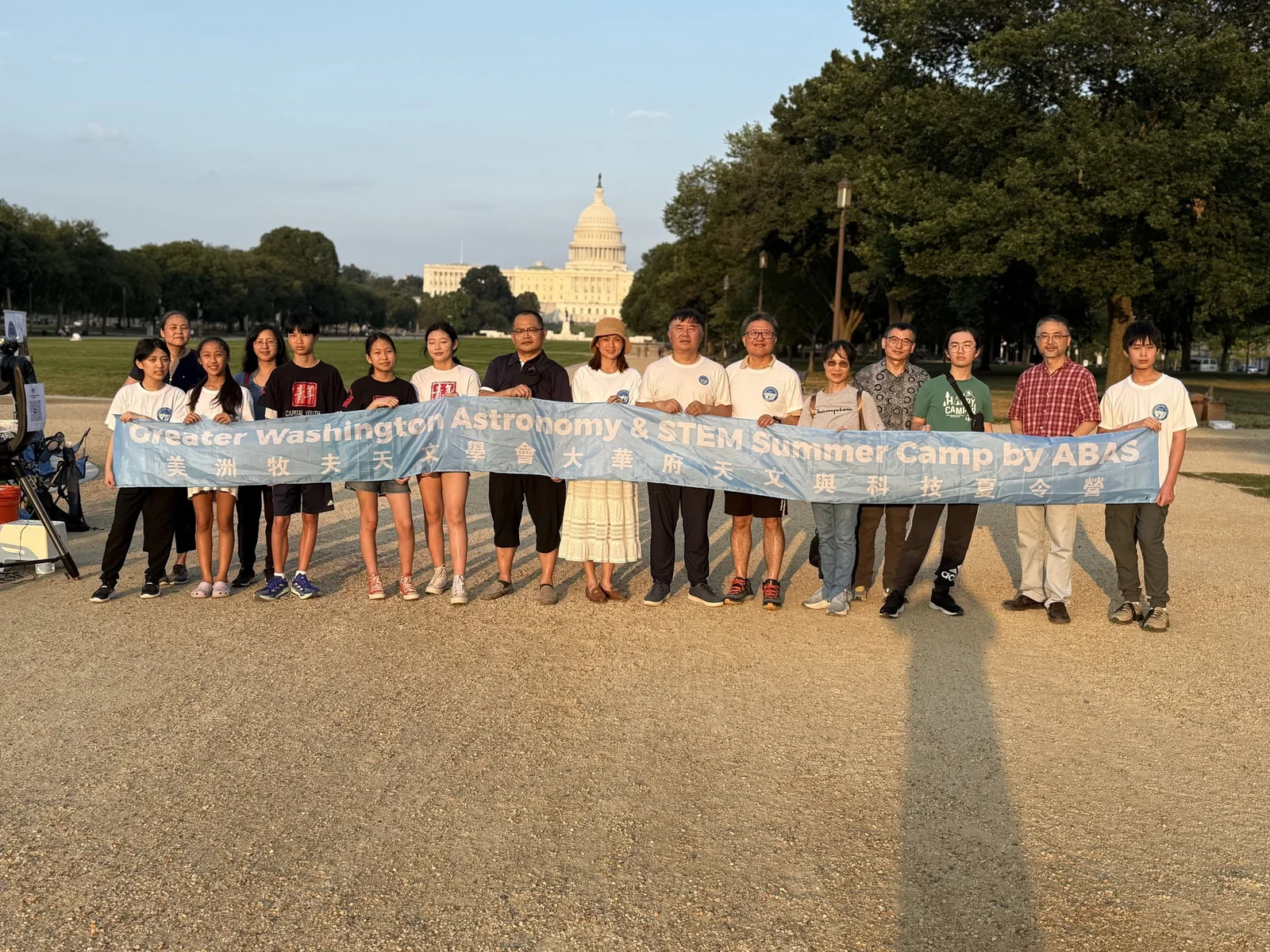
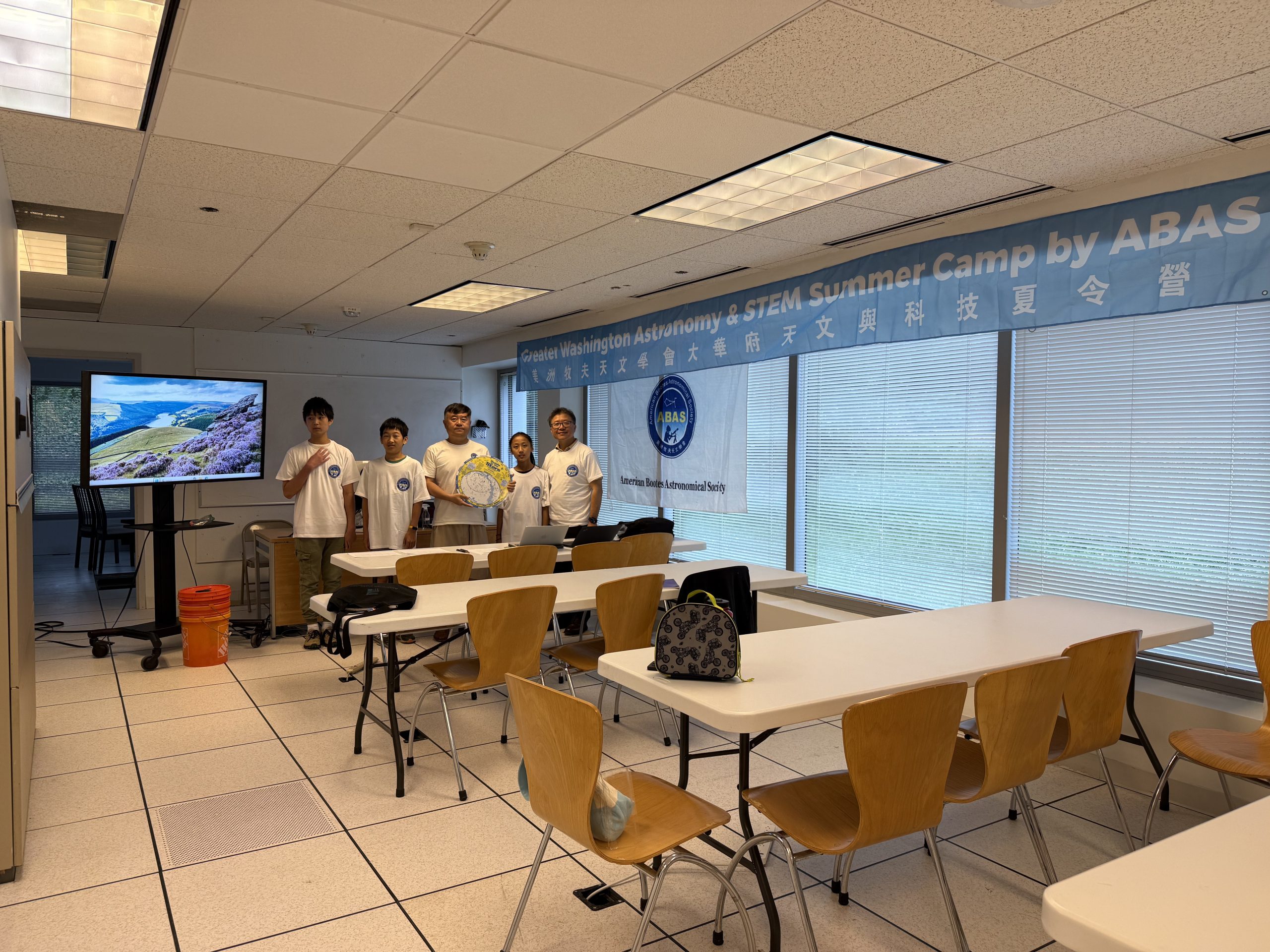
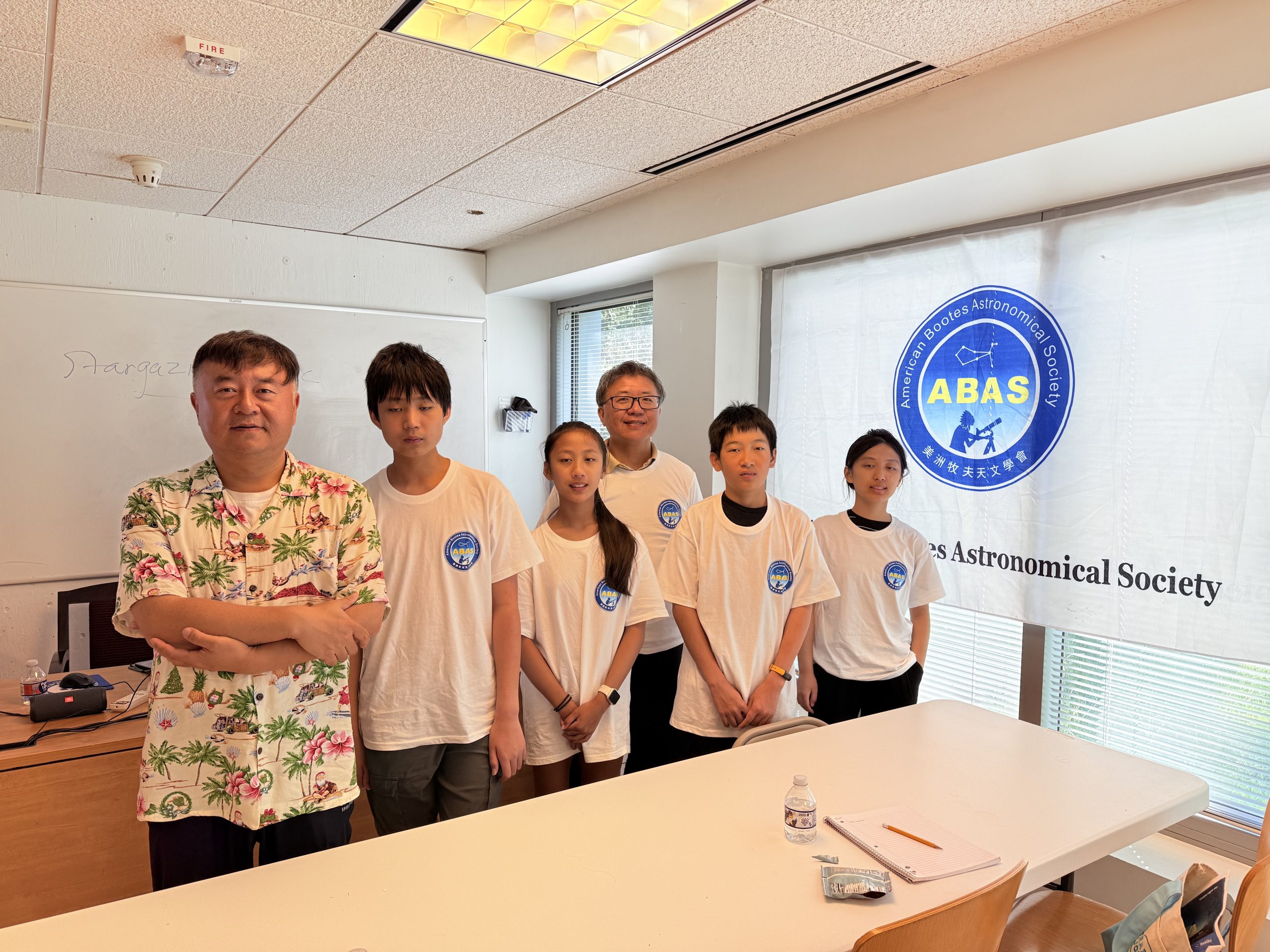
The American Boötes Astronomical Society held its first Greater Washington Astronomy and STEM Summer Camp at the University of North America from August 11 to 15, 2025. Designed for students ages 10–15, the camp drew about seven participants and ran from 9 a.m. to 1 p.m. each day, for a total of 20 hours. Classes were held in person and livestreamed online. The program also extended to Lake Fairfax Park on the evening of August 12 and the National Mall on the evening of August 15.
The five-day program began with finding one's way around the night sky, then moved on to astrophotography, telescopes and the solar system, lunar missions, and the Sun and space weather. Alongside lessons, students used software, built models, and designed missions.
August 11 · Navigating the night sky
Students first learned to distinguish stars, planets, moons, asteroids, and comets, then used Earth's rotation and orbit to explain day and night and the changing seasons. The lesson also covered the origins and naming of constellations and guided students in using Stellarium to find Polaris and summer constellations.
The day's lessons also prepared students to observe the Perseid meteor shower the following evening. They located the shower's radiant, learned why it returns at roughly the same time each year, and made simple constellation viewers.
August 12 · Astrophotography and the Perseids
The daytime session turned to astrophotography. Students practiced adjusting ISO, shutter speed, and aperture to see how these settings affected image brightness, noise, and motion blur. They also compared cameras, smartphones, and tablets for night photography and practiced composition, focusing, and using a stable mount.
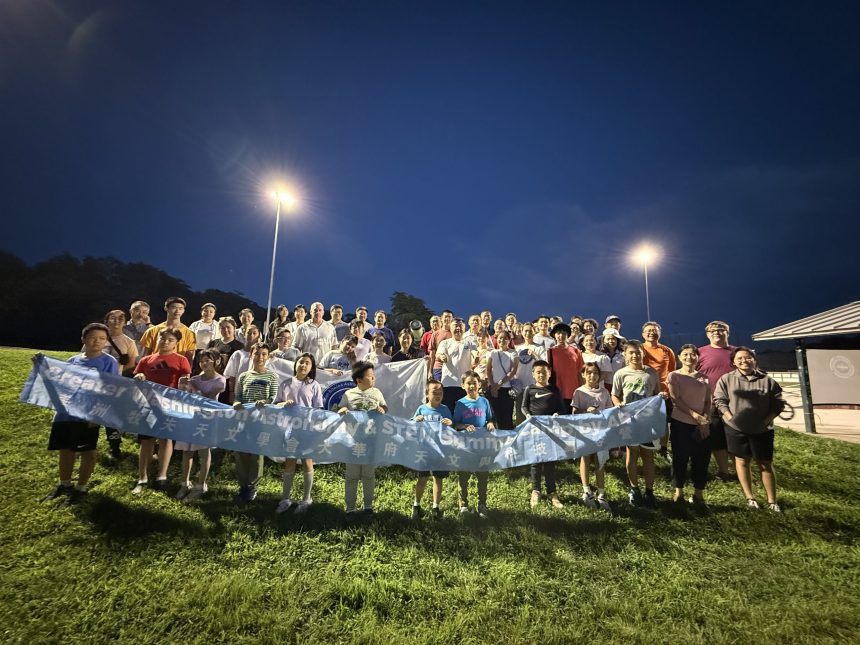
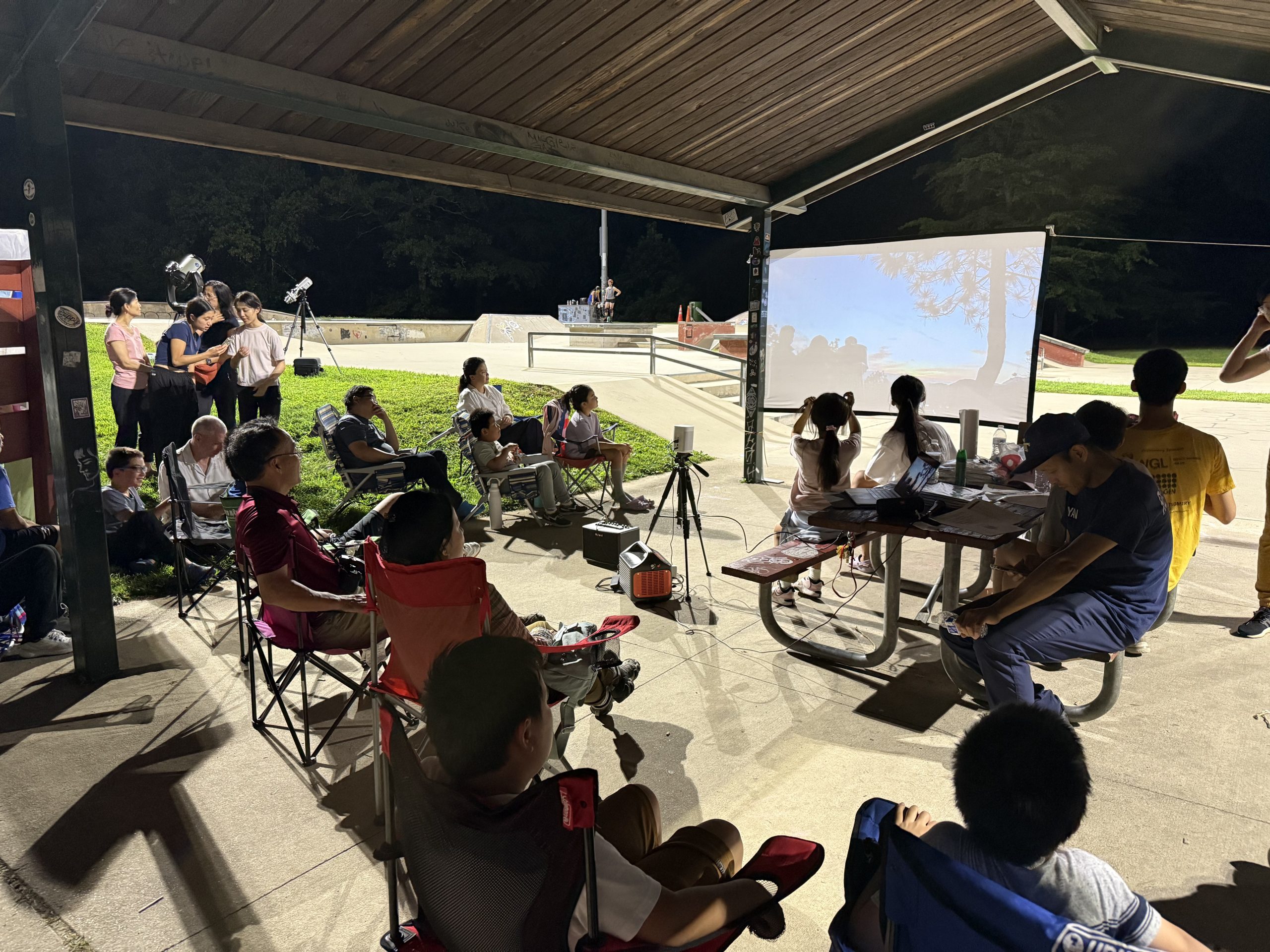
That evening, students and members of the public gathered at Lake Fairfax Park. Renjiang Xie introduced the Perseid meteor shower and showed related videos. Everyone then moved to a more open area, switched off unnecessary lights, and waited for meteors to appear.
The park was still affected by urban light pollution and moonlight, but the Perseids were producing meteors at a very high rate, so observers nevertheless saw several. About 100 people attended that evening; the event photographs show only some of them.
Observers also saw bright fireballs, missile exhaust clouds, and iridescent clouds. The park offers group campsites that can be reserved, and some participants pitched tents and stayed overnight after the event to continue watching the spectacular annual meteor shower.
August 13 · Telescopes and the solar system
The session focused on telescopes and the solar system. Students compared the uses of refracting, reflecting, and radio telescopes, learned about magnification, field of view, and inverted images, and built simple telescope models. In the digital activities, they used tools such as NASA Eyes to locate planets and track spacecraft positions.
The session also compared the surfaces and atmospheres of Mars and Venus, exploring how the greenhouse effect changes planetary environments and the challenges these conditions pose for spacecraft.
August 14 · Lunar missions
Students learned about lunar maria, craters, and highlands, used models to understand the Moon's phases and tides, and reviewed lunar exploration programs including Apollo, Chang'e, and Artemis.
In the group activity that followed, students defined the objectives of a lunar landing mission and planned its payload and robotic capabilities, while considering energy supplies, water resources, communications, and crew safety.
August 15 · The Sun and a National Mall finale
The session introduced the Sun's interior and atmosphere. Students learned about sunspots, flares, prominences, and the solar wind, along with the effects of space weather on communications, navigation, and auroras. The session also addressed light pollution and dark-sky conservation. To conclude, students completed their deep-space mission designs and presented their work.
After the day's classes, students, instructors, and volunteers headed to the National Mall for the camp's final outing.
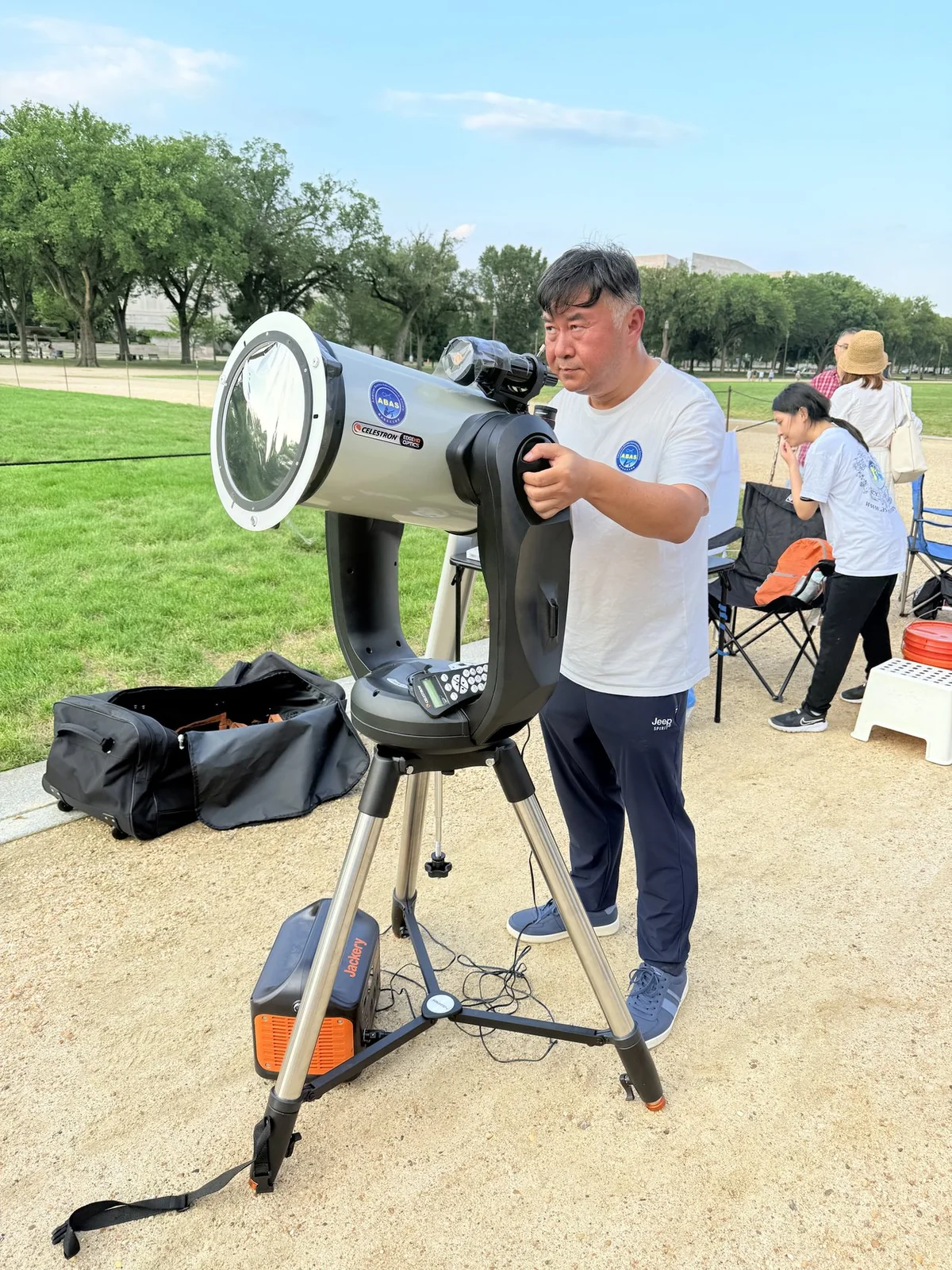
This was the society's second sidewalk astronomy event on the National Mall. The society had applied in advance to the U.S. National Park Service for a special event permit; planning documents estimated the application fee at about $120. Telescopes, solar filters, power supplies, outreach materials, tables, and chairs were then brought to the designated location.
The event ran from early evening into the night. Before sunset, the telescopes were fitted with dedicated solar filters so passersby could safely observe sunspots. Visitors included museumgoers, families, joggers, people leaving work at nearby institutions, and National Guard personnel.
Visitors on the National Mall came and went throughout the event. Some stopped briefly, while others stayed in line for a turn at the telescope.