
Images of the week
Fresh views of the universe.

Astronomy worldwide
The latest discoveries.
Releases and pictures from NASA, ESA/Webb, ESA/Hubble, ESO, and NSF NOIRLab. Each story opens on the original institution’s site.
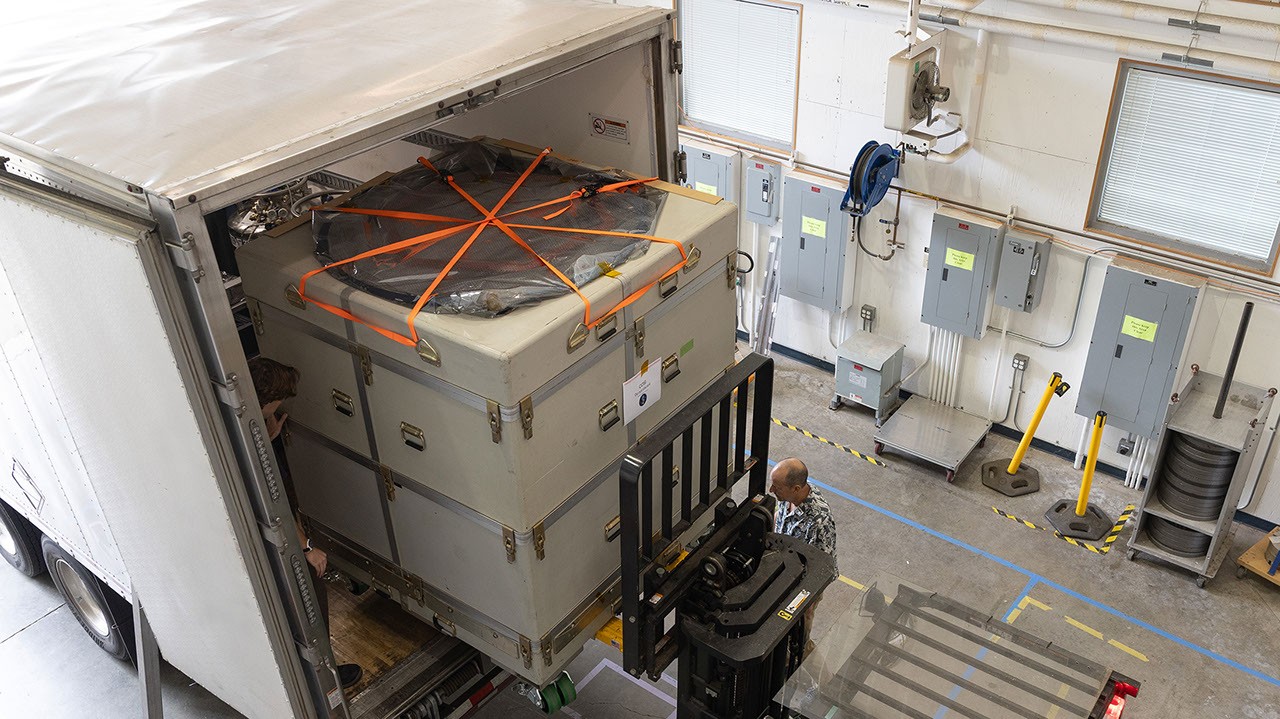
NASA Payload to Study Gamma Rays Arrives at Northrop Grumman
The scientific payload for NASA’s upcoming COSI mission arrived at Northrop Grumman’s satellite manufacturing facility in Sterling, Virginia, earlier this month.
Read at NASA (opens in a new tab)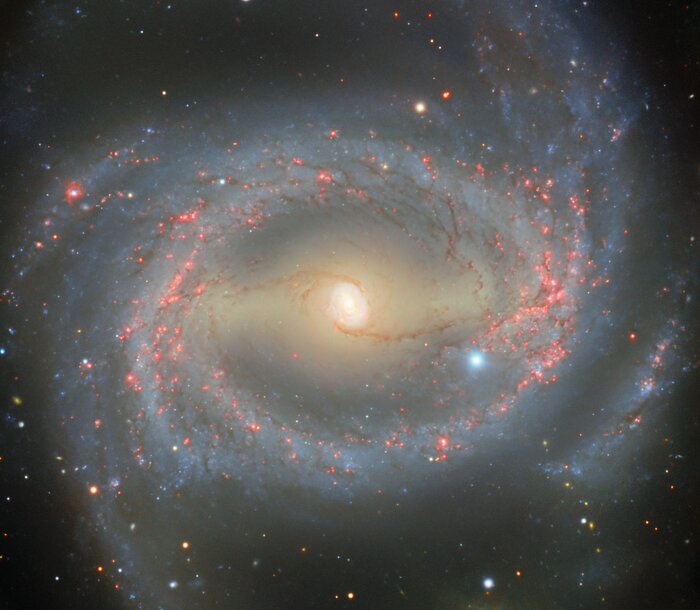
NSF NOIRLab-operated Facilities Capture Brightening Nearby Supernova
Newly discovered supernova SN 2026ahvu in the nearby spiral galaxy NGC 1433 bedazzles new images from the Dark Energy Camera and the International Gemini Observatory. Caught early and still approaching its expe…
Read at NSF NOIRLab (opens in a new tab)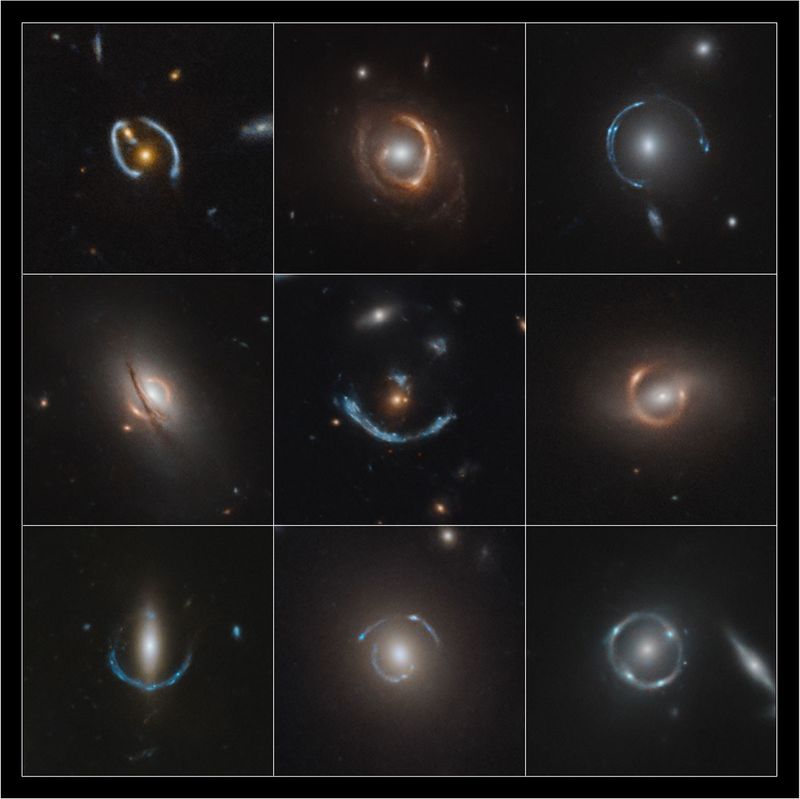
NASA’s Hubble Offers Cosmic Sampler of Targets for Roman
A gallery of gravitational lenses captured by NASA’s Hubble Space Telescope showcases the diversity of this cosmic phenomenon and lays the groundwork for follow-up observations by the Nancy Grace Roman Space Te…
Read at NASA (opens in a new tab)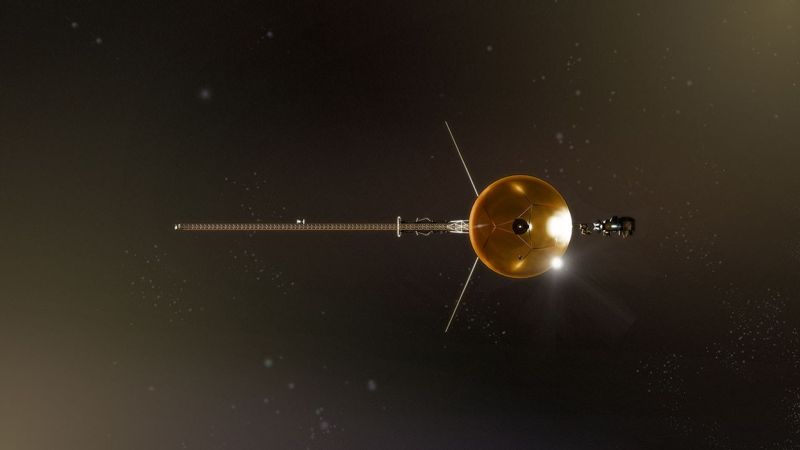
NASA Invites Media, Public to Join Voyager 1 One-Light Day Activities
Editor’s note: This advisory was updated Nov. 13, 2026, to reflect changes in the participant list for the Voyager event. Launched nearly 50 years ago in 1977, NASA’s Voyager 1 on Wednesday, Nov. 18 will have t…
Read at NASA (opens in a new tab)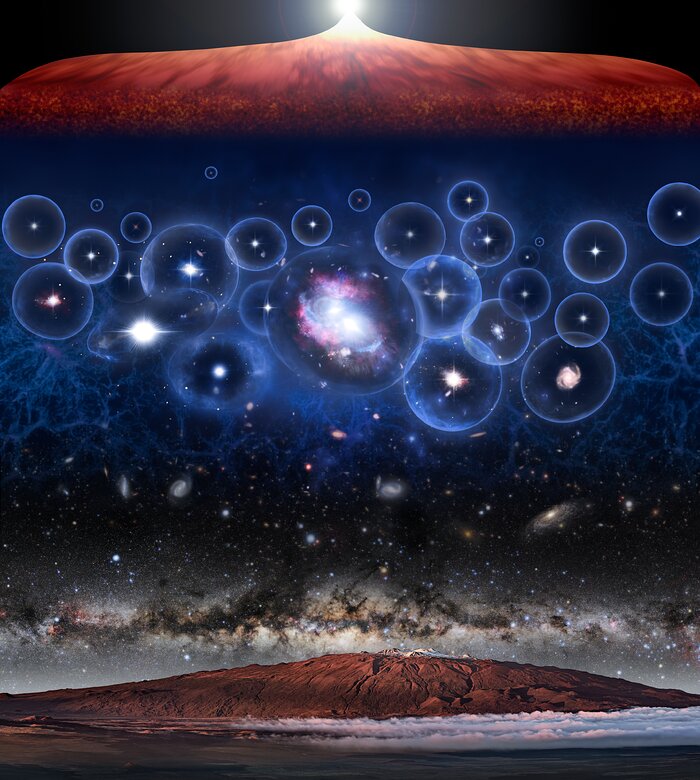
Astronomers Discover Nāpōwawāʻenakaulua, the Oldest Compact Quasar Pair in the Universe
The oldest pair of compact quasars ever observed has been found only 900 million years after the Big Bang. Scientists say there is no theoretical explanation for how the pair of actively feeding black holes gre…
Read at NSF NOIRLab (opens in a new tab)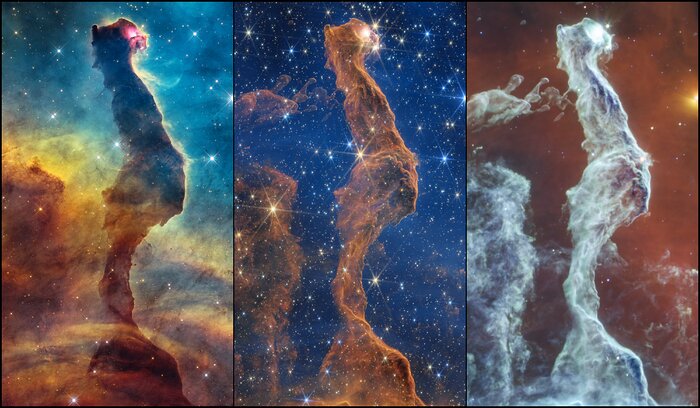
Ghostly Cat’s Head Nebula lurks within sight of Hubble and Webb
The NASA/ESA Hubble and the NASA/ESA/CSA James Webb Space Telescopes recently stared at an eerie star-forming scene within the Carina Nebula, a massive gas and dust cloud located approximately 7,500 light-years…
Read at ESA/Webb (opens in a new tab)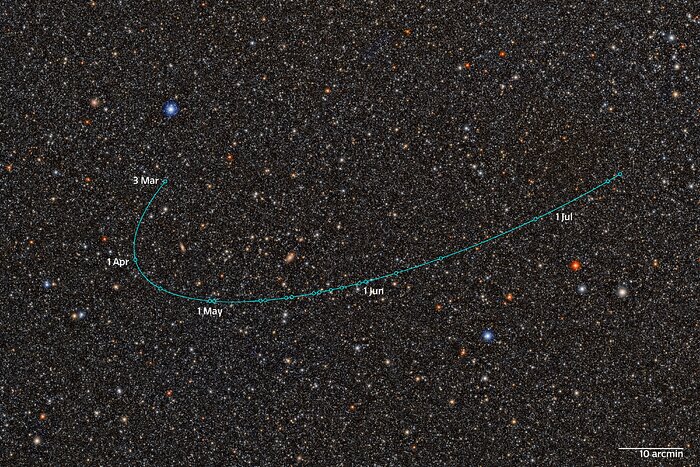
NSF–DOE Vera C. Rubin Observatory Reveals Its First Dwarf Planet Candidate in Our Solar System
In the outer reaches of our Solar System, beyond the orbit of Pluto, NSF–DOE Vera C. Rubin Observatory has spotted 2026 ED138 — a large, bright trans-Neptunian object that scientists have identified as a dwarf…
Read at NSF NOIRLab (opens in a new tab)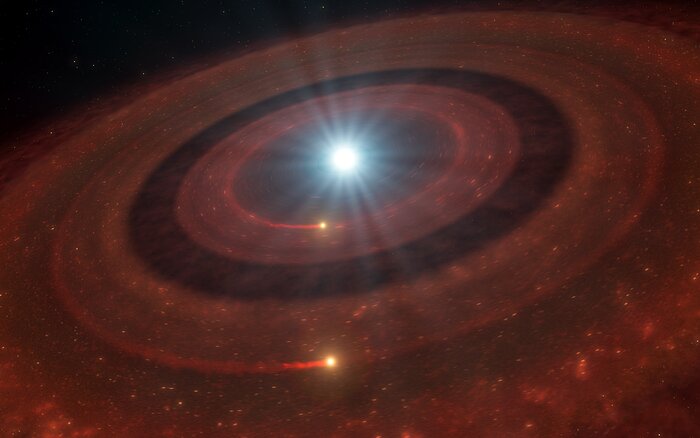
Dead star and planetary bodies: astronomers spot unique disc of debris that foretells Solar System’s future
Astronomers using the European Southern Observatory’s Very Large Telescope (ESO’s VLT) have found a rare disc of debris around a dead star that provides a glimpse of what may happen to our Solar System. Unlike…
Read at ESO (opens in a new tab)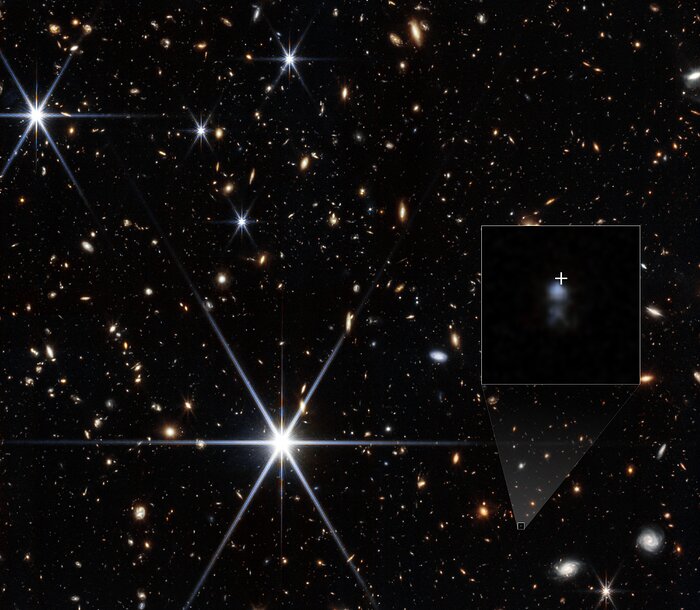
Webb measures distance to farthest fast radio burst, suggesting origin
First discovered in 2007, fast radio bursts are enigmatic, millisecond-long flashes of radio emission from the distant Universe. Their origin remains uncertain, particularly since most are seen once and never a…
Read at ESA/Webb (opens in a new tab)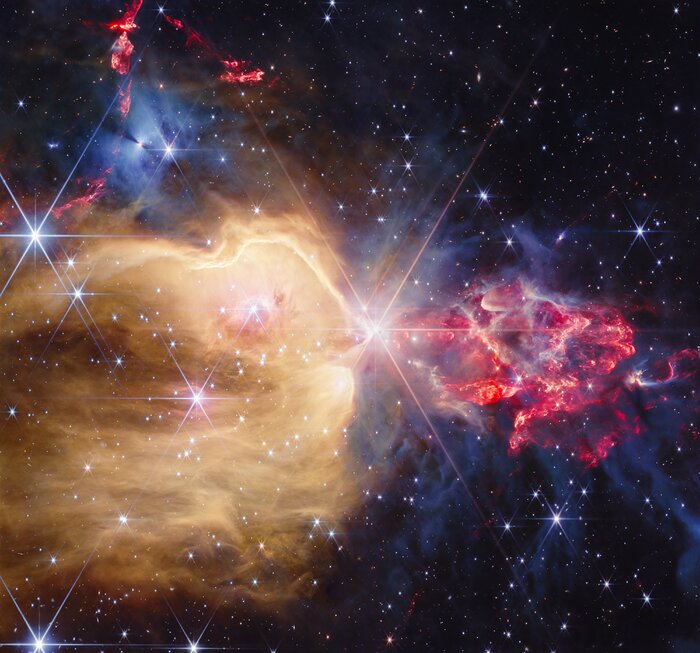
Webb captures commotion from nebula’s stellar jets
A technicolor dreamscape is revealed in this new image from the NASA/ESA/CSA James Webb Space Telescope. It portrays a stellar nursery known as NGC 7129, a nebula that holds numerous protostars and stars within…
Read at ESA/Webb (opens in a new tab)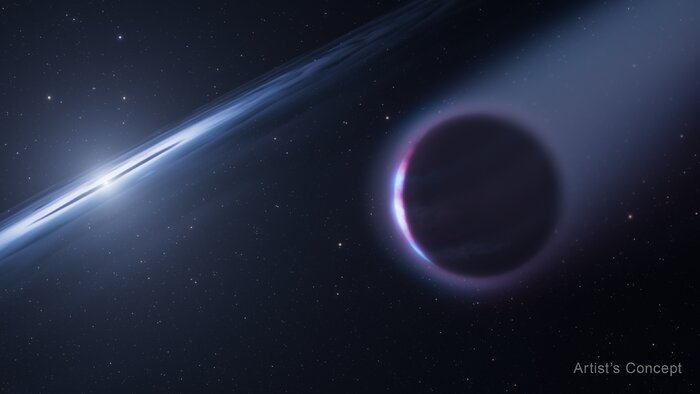
Suspected second-generation planet solves Hubble cold case
For more than a quarter century, unidentified chemical signatures from a white dwarf star have laid dormant in the archive of the NASA/ESA Hubble Space Telescope, until diligent sleuthing by a young astronomer…
Read at ESA/Hubble (opens in a new tab)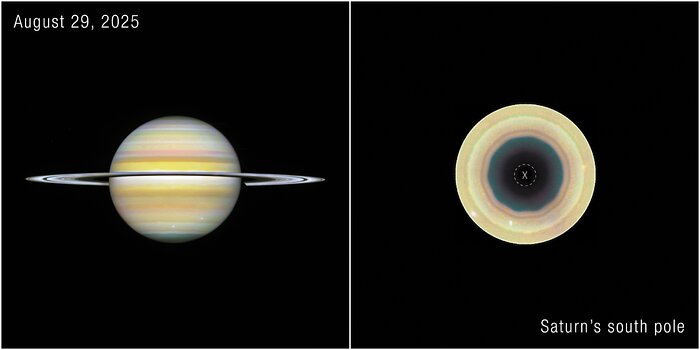
Hubble tracks new decagon encircling Saturn’s south pole
Recent observations with the NASA/ESA Hubble Space Telescope have revealed a giant, evolving 10-sided atmospheric wave encircling Saturn’s south pole. This discovery marks the first time a large regular-sided j…
Read at ESA/Hubble (opens in a new tab)Spaceflight
Next launches.
Rockets leaving for orbit and beyond in the coming days, from launch sites around the world. Launch times are “no earlier than” estimates and often slip.
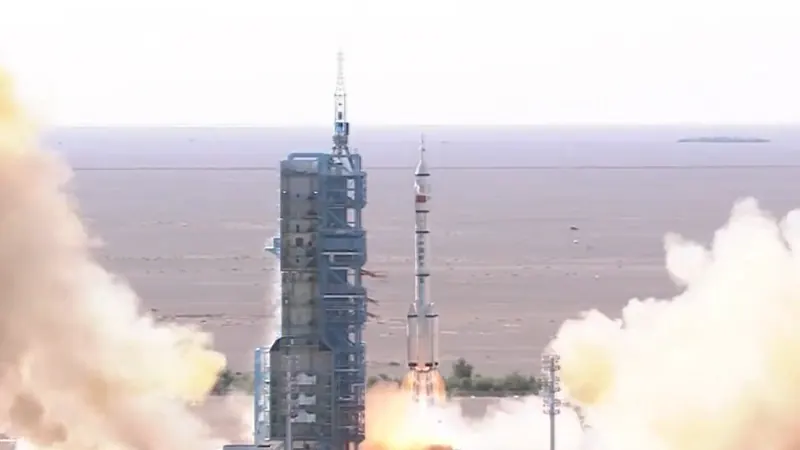
Long March 2D (opens in a new tab)
Payload not yet announced
Go for launch
Taiyuan Satellite Launch Center, People's Republic of China
File photo of Long March 2F: China News Service, CC BY 4.0.
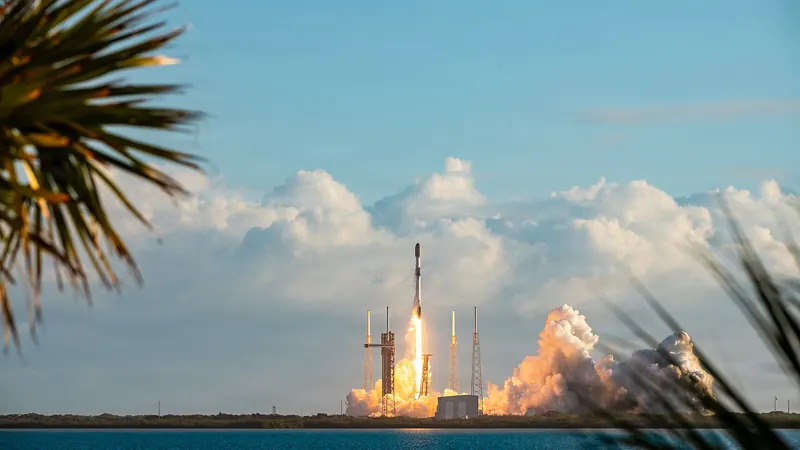
USSF-317 (opens in a new tab)
Falcon 9 Block 5
Go for launch
Vandenberg SFB, CA, USA
File photo of Falcon 9: U.S. Space Force / Gwendolyn Kurzen, public domain.

SatNet LEO Group TBD? (opens in a new tab)
Long March 8A
Date to be confirmed
Wenchang Space Launch Site, People's Republic of China
File photo of Long March 7: China News Service, CC BY 4.0.
NROL-136 (opens in a new tab)
Falcon 9 Block 5
Go for launch
Vandenberg SFB, CA, USA
File photo of Falcon 9: U.S. Space Force / Gwendolyn Kurzen, public domain.
Sky and space this week
What to watch for.
Space station passes
Visible from Rockville, MD
- Working out the next passes…
A pass is visible when the station is lit by the Sun and the sky is dark. Times are local time in Rockville.
See every satellite on the globeAurora and space weather
Below storm level
- Tue, Nov 17 (UTC)Kp 4.7G1 Minor storm
- Wed, Nov 18 (UTC)Kp 4.7G1 Minor storm
- Thu, Nov 19 (UTC)Kp 2.3Below storm level
WATCH: Geomagnetic Storm Category G1 Predicted Nov 15 (UTC)
Kp 5 or higher is a geomagnetic storm on NOAA’s G1–G5 scale. Fairbanks sits under the auroral oval, so even Kp 1–3 nights can bring aurora when the sky is dark and clear; around Washington, D.C. it usually takes a strong storm near Kp 7 or more.
NOAA aurora dashboard (opens in a new tab)Moon and night sky
- First QuarterTue, Nov 17 · 11:48 am UTC
- Full MoonTue, Nov 24 · 2:53 pm UTC
- Last QuarterTue, Dec 1 · 6:08 am UTC
- New MoonWed, Dec 9 · 12:52 am UTC
Skywatching guides from NASA
Asteroid close approaches
- Mon, Nov 16 (UTC) 2026 VW15 (opens in a new tab) 5.1 lunar distances · about 10–22 m wide · 6.1 km/s
- Mon, Nov 16 (UTC) 2026 VM3 (opens in a new tab) 8.1 lunar distances · about 9–20 m wide · 3.7 km/s
- Tue, Nov 17 (UTC) 2026 VJ13 (opens in a new tab) 3.5 lunar distances · about 9–21 m wide · 10.4 km/s
- Tue, Nov 17 (UTC) 2023 VE6 (opens in a new tab) 18.3 lunar distances · about 10–22 m wide · 10.1 km/s
- Tue, Nov 17 (UTC) 2026 WA (opens in a new tab) 0.3 lunar distances · about 4–9 m wide · 6.7 km/s
Objects passing within 0.05 au (about 19 lunar distances) of Earth in the next 60 days. Sizes are estimated from brightness.
Sources and image credits Updated hourly · last update 7 minutes ago
- Fresh views of the universe.
- NASA Image of the Day · ESO Picture of the Week · ESA/Webb Picture of the MonthNASA images are generally public domain; ESO and ESA/Webb images are CC BY 4.0. Full credits appear on each original page.
- The latest discoveries.
- NASA (United States) · ESA (Europe) · ESA/Webb (Europe) · ESA/Hubble (Europe) · ESO (Europe and Chile) · NSF NOIRLab (United States and Chile) · ALMA (Chile) · NAOJ (Japan) · Keck Observatory (Hawaiʻi) · NSF NRAO (United States) · SETI Institute (United States)Headlines and summaries come from each institution’s public news feed; full image credits appear on the original release.
- Next launches.
- The Space Devs Launch LibraryEach name opens the launch on Space Launch Now. Mission photos are credited on each card; when a mission has no openly licensed photo, a file photo of the same rocket from Wikimedia Commons is shown.
- What to watch for.
- NOAA Space Weather Prediction Center · U.S. Naval Observatory · NASA · NASA/JPL CNEOS · CelesTrakTimes are shown in the site’s time zone, except station passes, which use local time in Rockville, MD.